My 2008 Toyota Prius is pretty beat up. It runs, it drives, and for this test, it had another job: keeping my gas furnace running during a simulated power outage.
I started with a full tank of fuel, connected an inverter, and let the car supply electricity to the furnace. After the first day, the fuel gauge had barely moved, so I added my refrigerator, too.
The result honestly blew me away. By the final check, the car had used only about two bars on its fuel gauge. That suggested the possibility of roughly 10 days or more of backup power under similar conditions. That was an estimate, though, not a completed 10-day test. Here is how the setup worked, what I measured, and what matters before trying anything similar.
Key Takeaways
- The Prius supplied furnace power for just over two days, with refrigeration added after the first day.
- The projected 10-day runtime came from fuel-gauge observations, not a completed full-tank endurance test.
- Natural gas provided the heat while the inverter powered the furnace’s electrical components.
- Safe exhaust placement, vehicle load limits, and proper furnace transfer equipment are essential.
Table of Contents
- Why a Hybrid Can Make a Useful Backup Power Source
- Safety Comes Before Runtime
- The Equipment I Used
- Getting the Prius Ready to Supply Power
- Switching the Gas Furnace to Backup Power
- What Happened During the First Heating Cycles?
- After One Day, I Added the Refrigerator
- The Final Fuel Check: Promising, but Not a 10-Day Measurement
- How Quiet Was the Prius?
- Would I Consider a Prius for Emergency Backup Power?
Why a Hybrid Can Make a Useful Backup Power Source
The big advantage of the Prius is that its gasoline engine does not have to run continuously to supply a small electrical load. With the hybrid system operating, the engine starts and stops automatically as the car manages its battery charge.
That makes it an interesting option for emergency preparedness. Instead of listening to an engine run nonstop, I had stretches of quiet operation followed by a few minutes of engine runtime.
The basic power path in this test was:
- The Prius maintained its low-voltage electrical system while the hybrid system was operating.
- An inverter connected to the 12-volt battery converted DC electricity into household AC electricity.
- An extension cord supplied a dedicated furnace transfer switch.
- A second extension cord later supplied the refrigerator directly.
This was not a whole-house backup system. I deliberately focused on two important loads: heat and refrigeration.
Some newer vehicles have built-in AC outlets, which can simplify the equipment side of the job. My older Prius needed an external inverter. Vehicle capabilities vary, so this test should not be treated as proof that every hybrid supports the same arrangement or electrical load.
Safety Comes Before Runtime
A quiet hybrid is still a gasoline-powered vehicle, and its engine can start without warning. Never operate it in a garage or another enclosed or partly enclosed space, even with the door open. Keep exhaust well away from doors, windows, and air intakes, including any opening used to bring a cord indoors. Working carbon monoxide alarms are essential. The CDC’s carbon monoxide guidance explains why engine exhaust is such a serious hazard.
This is also an electrical installation, not just a matter of buying a large inverter. Before using a setup like this:
- Verify the vehicle’s permitted continuous electrical load and the inverter manufacturer’s installation requirements.
- Use correctly sized cables, appropriate overcurrent protection, secure connections, and adequate inverter ventilation.
- Keep cords and connections dry, and protect cables from being crushed by a hatch, door, or window.
- Have a qualified electrician install and verify any connection to a hardwired furnace, including transfer, grounding, and neutral arrangements.
- Never feed backup electricity into a household receptacle to energize home wiring.
The inverter’s wattage rating does not establish how much power the vehicle can safely supply. A 3,000-watt inverter, for example, does not turn the Prius’s 12-volt system into a 3,000-watt source.
The Equipment I Used
The setup centered on a Renogy 1,000-watt inverter with two AC receptacles. That gave me one connection for the furnace and another for the refrigerator. The same product line also offers 2,000- and 3,000-watt models, but the unit used here was labeled 1,000 watts.
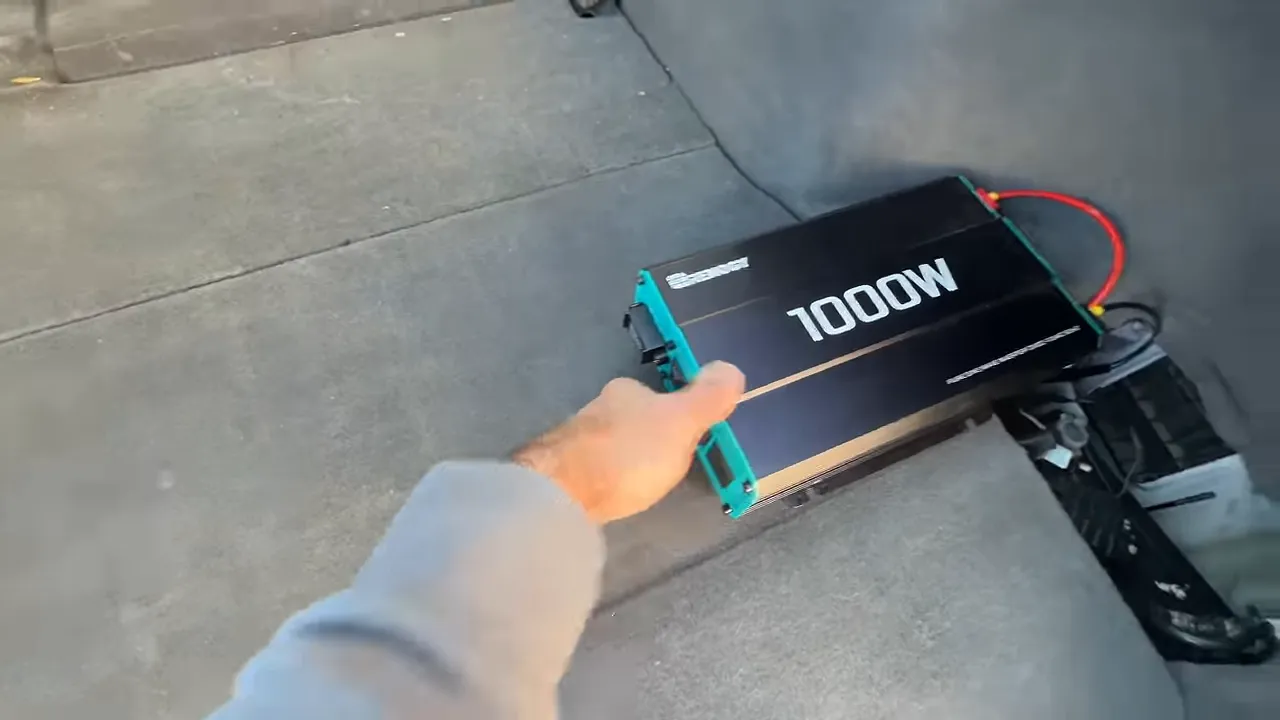
I used separate battery clamp leads for the demonstration and a multimeter to monitor voltage at the 12-volt battery. For a planned emergency installation, follow the equipment instructions rather than treating temporary clamps as a complete permanent connection method.
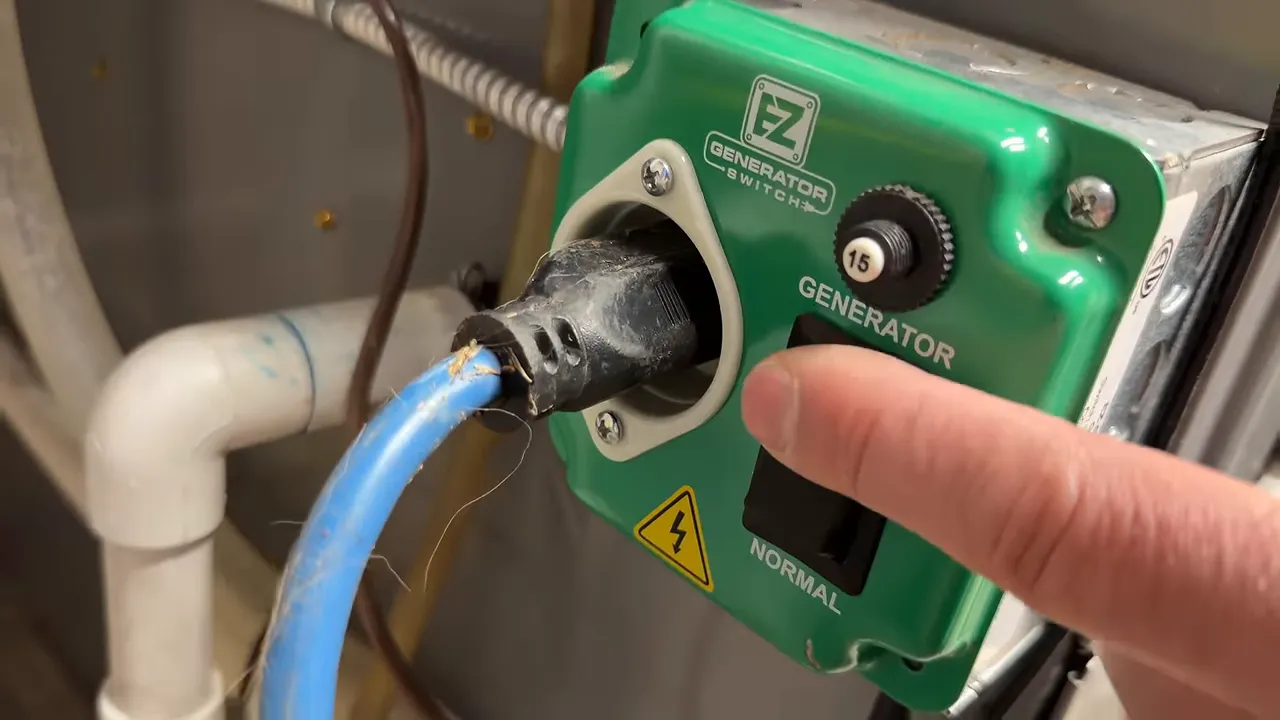
At the furnace, I already had an EZ Generator Switch installed. At the time of the test, I described its price as about $89. Its purpose is to let a compatible furnace receive power from an alternate source while isolating that circuit from utility power.
I keep the inverters and other equipment I use with my recommended tools.
|

Getting the Prius Ready to Supply Power
I topped off the fuel tank before starting. The test began on Wednesday the 11th at roughly 10:15 a.m., with the outdoor temperature around 50°F. That temperature matters: this was a mild-weather test before serious winter cold arrived.
The inverter connected to the Prius’s accessible 12-volt battery in the rear of the vehicle, not directly to the high-voltage hybrid battery. High-voltage hybrid components are not part of this DIY arrangement and should not be disturbed.
I then put the car into its operating state. For this Prius, that means the hybrid system must be in READY mode, not simply accessory mode. Leaving only the accessories on is not the same thing as allowing the hybrid system to maintain power.
Shortly afterward, the engine started on its own and then shut back down. That automatic cycling was exactly the behavior I wanted to test.
Securing the car
Because the vehicle remained ready to operate, security mattered, too. Mine was parked behind a gate. I also demonstrated removing the mechanical key from the fob and using it to lock the doors while the fob remained inside.
That locking behavior is vehicle-specific, and locking the doors does not eliminate the risks of leaving an operable vehicle unattended. Keep the car in Park, apply the parking brake, and prevent unauthorized access. Disconnect all backup-power equipment before moving the vehicle.
Switching the Gas Furnace to Backup Power
Since this was a simulated outage, utility power was still available. Before transferring the furnace, I lowered the thermostat so the heating call would end and gave the furnace a few minutes to finish its normal shutdown and cooldown.
That is a better planned-test procedure than interrupting an active heating cycle at the service switch. A real outage can interrupt a furnace at any point, but when you control the timing, let the equipment complete its normal sequence.
The extension cord ran from the inverter to the dedicated furnace inlet. I moved the transfer switch from its normal position to generator power, making the Prius the furnace’s electrical source.
Does the thermostat need separate backup power?
For my system, no. Restoring electricity to the furnace also restored power to the smart thermostat through the furnace’s low-voltage controls. A battery-operated thermostat can continue using its own batteries.
Once the thermostat came back up, I raised the heating setting to 68°F and checked the furnace’s startup sequence:
- The inducer started.
- The hot-surface igniter heated up.
- The burners ignited.
- The circulating blower followed after its normal delay.
Then I checked a supply register. The air temperature was already around 102°F as the system warmed up. The furnace was heating normally, with its electrical supply coming from the Prius rather than the grid.
The electricity runs the furnace, but gas supplies the heat
This distinction is critical. I was not using the inverter to create all the heat electrically. Natural gas still supplied the heating energy; the Prius supplied electricity for the furnace’s motors, ignition, and controls.
If natural gas service is unavailable, this arrangement will not make a gas furnace produce heat. In previous Salt Lake power outages, I have had gas service remain available while electricity was out. That is the situation this test was designed around.
It also does not establish that the same inverter could run electric resistance heating, an electric furnace, or a heat pump.
What Happened During the First Heating Cycles?
My furnace is a 96% efficient model. In a separate power-station test, I had measured its running electrical demand at about 140 to 150 watts. That is specific to this furnace and operating condition, not a universal furnace power requirement.
At approximately 10:18 a.m., I measured about 13.8 volts at the Prius’s 12-volt battery. The furnace was operating, but the gasoline engine was not running continuously.
At 10:38 a.m., I noticed the engine start again. It stopped at about 10:41 a.m., giving that cycle roughly three minutes of engine runtime. Indoors, the thermostat read 67°F and was approaching the 68°F setting.
The multimeter readings stayed close to 13.8 volts. Those readings were useful for observing the low-voltage supply, but they were not a measurement of remaining hybrid-battery capacity or a reliable engine-start threshold. The hybrid system controls engine operation.
After One Day, I Added the Refrigerator
At about 12:30 p.m. the next day, the furnace had run through the night and morning without an interruption in the test. The multimeter showed approximately 13.84 volts, and the fuel gauge still looked nearly full.
By then, I was noticing engine starts approximately every 10 to 15 minutes, followed by a couple of minutes of running. Those were casual observations, not a continuous runtime log.
With so little apparent movement on the fuel gauge, I added the refrigerator using a second extension cord connected to the inverter. The refrigerator powered up and functioned normally.
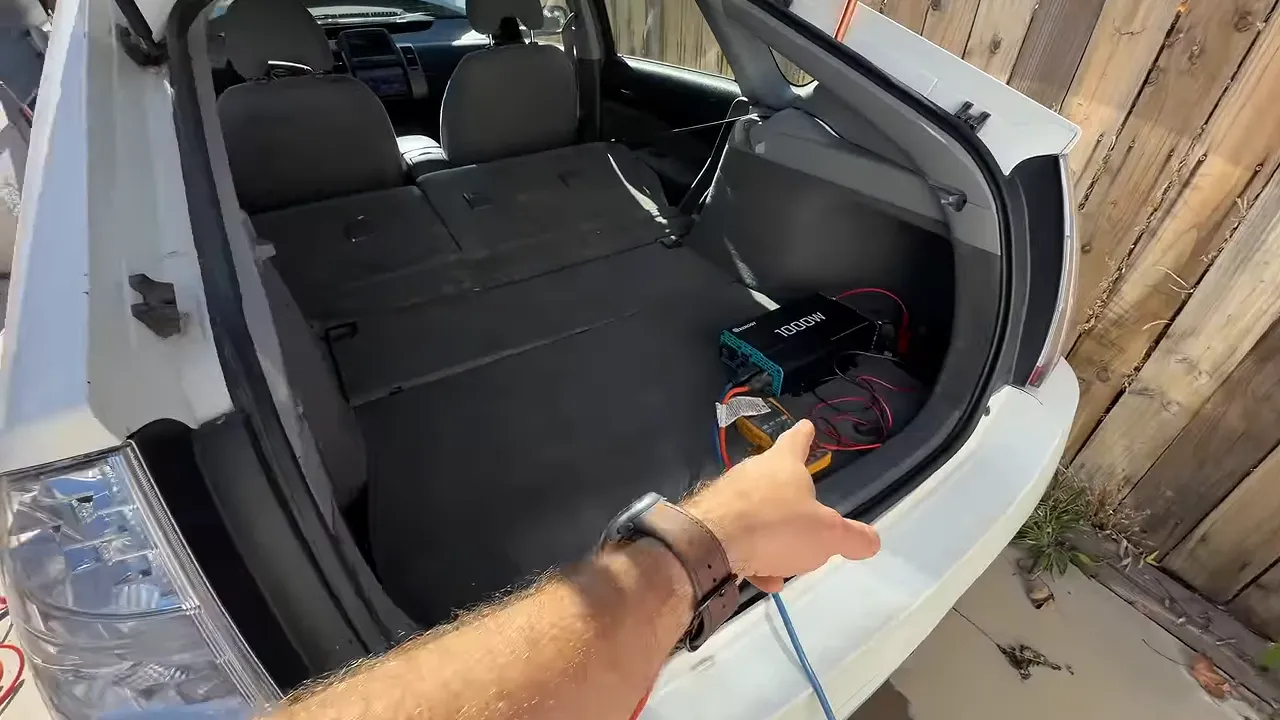
I did not notice an obvious increase in the length of the next engine cycle; it was still around three minutes. That does not mean the refrigerator added no energy demand. It simply did not create a dramatic change in that observation.
For another installation, running wattage is only part of the sizing question. The inverter and vehicle supply also have to accommodate startup demand, including the possibility of both appliances starting together.
The Final Fuel Check: Promising, but Not a 10-Day Measurement
The final update was Friday the 13th at about 11:45 a.m. Voltage was approximately 13.79 volts, the inverter did not feel noticeably warm when I checked it, and the system was still operating.
By that point, I counted roughly two fuel-gauge bars used from the full tank. With a ten-bar gauge, that looked pretty stinking impressive.
There are two important limits to put around the result:
- The dated checks cover about 49½ hours. Wednesday morning to Friday late morning is just over two days, even though I loosely described it as about three days during the test.
- The refrigerator joined after the first day. Both appliances were not connected for the entire test period.
My estimate of 10 days or more came from extending that apparent fuel-use rate across a full tank. I did not run the tank empty or measure the gallons needed to refill it, and fuel-gauge bars are not precision fuel measurements.
Colder weather, longer furnace cycles, a different blower motor, refrigerator demand, and vehicle condition could all change the outcome. The demonstrated result was a successful multiday test; the 10-day figure was a projection under similar conditions.
How Quiet Was the Prius?
I also took a quick sound-meter comparison. With the engine off, the reading was around 45 decibels. With the engine running, it was around 55 decibels.
This was an informal comparison, not a controlled noise test. Still, it matched my experience indoors: the starts and stops did not keep me awake, and I could not hear them from the primary bedroom.
That quiet cycling is a real attraction for a small emergency load. The inverter’s cooling fan was audible nearby, but the setup was unobtrusive from inside the house. Quiet operation, of course, does not make exhaust any less hazardous.
Would I Consider a Prius for Emergency Backup Power?
Absolutely, especially if I already owned a compatible hybrid. This old car kept the furnace operating and later powered the refrigerator, too, while showing surprisingly little fuel use on the gauge.
A dedicated generator or large power station can cost $1,000 to $1,500 or more, depending on the equipment. A vehicle offers something those systems do not: transportation. Once safely disconnected, it can still take you to the store.
That does not make a used Prius a maintenance-free generator replacement, and a conventional car can also supply an appropriately limited inverter load. What stood out here was the hybrid’s ability to manage engine cycling automatically rather than requiring continuous engine operation.
The biggest lesson is not that every Prius will heat every house for 10 days. It is that a modest electrical supply can keep a compatible gas furnace useful during an outage, provided gas service remains available and the backup connection is properly designed.
For my furnace and refrigerator in these mild conditions, the result was awesome. Test your own critical loads before an emergency, verify the vehicle and electrical limits, and put safe exhaust placement and proper transfer equipment ahead of any runtime estimate.


